Best Used Trucks for NJ Winters: Six Picks Ranked
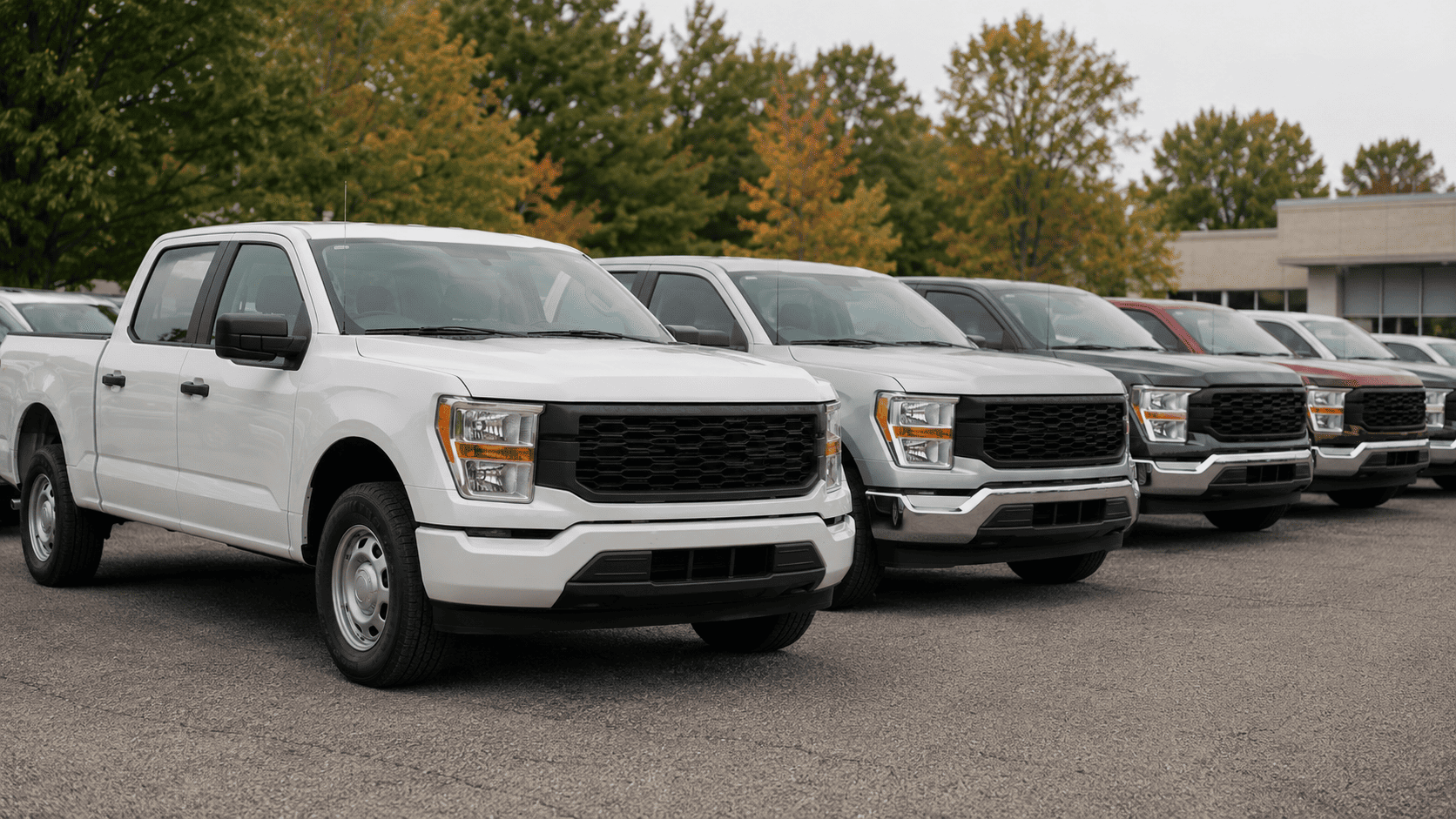
The best used trucks for New Jersey winters are not all best for the same buyer. A parent carrying children needs a roomy crew cab, strong crash protection, and driver-assistance features. A contractor may care more about payload, bed access, towing equipment, and four-wheel drive. A commuter may prefer automatic all-wheel drive and easier parking.
This guide ranks six common used trucks and explains which option best suits each type of buyer. The ranking considers winter traction, braking performance, tire requirements, safety features, daily driving comfort, work capability, and used-market availability. Features can vary by model year and vehicle configuration, so check the equipment list for the specific truck using its Vehicle Identification Number (VIN) before buying.
Quick answer: the six trucks ranked
| Rank | Truck | Best for | Main trade-off |
|---|---|---|---|
| 1 | Ford F-150 | Families, work, and winter driving | Large size; quality varies by year and engine |
| 2 | Ram 1500 | Family comfort with available 4WD | Payload varies; check air suspension if equipped |
| 3 | Chevrolet Silverado 1500 | Construction work and heavy towing | Comfort and safety features vary by version |
| 4 | GMC Sierra 1500 | Strong capability with premium trims | Higher trims may cost more |
| 5 | Honda Ridgeline | Families, commuting, and paved winter roads | Less towing and off-road capability |
| 6 | Toyota Tacoma | Narrow roads, trails, and light-duty work | Tight rear seat; check 2005-2017 frames for rust |
Choose by how you will use the truck
| Buyer | Priorities | Best starting points |
|---|---|---|
| Family with children | Rear-seat space, child-seat access, and safety features | F-150, Ram 1500, Ridgeline |
| Single or young commuter | Easy parking, fuel use, insurance, and ride comfort | Ridgeline, Tacoma |
| Construction worker | Payload, bed size, tie-downs, and 4WD | F-150, Silverado, Sierra, Ram |
| Heavy towing | Tow rating, payload label, tow package, and trailer brakes | F-150, Silverado, Sierra, Ram |
| Unplowed roads | 4WD, ground clearance, and winter tires | Tacoma, F-150, Ram, Silverado, Sierra |
| Suburban driving | AWD or automatic 4WD, safety features, and winter tires | Ridgeline; Ram or F-150 if more capacity is needed |
Features and capabilities vary by model year and configuration. Check the exact truck before buying. AWD and 4WD improve traction but do not reduce braking distance, so good winter tires remain essential.
4WD, AWD, braking, and winter tires
Four-wheel drive (4WD) and all-wheel drive (AWD) are not interchangeable. Traditional 4WD is usually selected by the driver and can provide low-speed traction for deeper snow, unplowed roads, job sites, and towing. AWD works automatically and is well suited to wet roads, light snow, and mixed suburban or highway driving.
Neither system shortens stopping distance on ice. Tires, brake condition, speed, and following distance control how safely a truck stops. An empty pickup can also have less weight over the rear wheels, which can make the rear end easier to slide. Electronic stability control helps, but it cannot replace good tires or careful speed.
- Check winter-tire tread depth, tire age, and overall condition.
- Inspect brake pads, rotors, brake lines, and the operation of ABS before winter.
- Confirm that 4WD engages correctly and that no warning lights appear on the test drive.
- Do not add loose weight to the bed. If ballast is needed, secure it and stay within payload limits.
The six best used trucks for NJ winters
1. Ford F-150: best overall
The F-150 earns the top spot because it can serve a family, a contractor, or a driver who tows. Used inventory is broad, crew-cab models offer practical rear-seat space, and many trims include selectable 4WD. Later model years may offer automatic emergency braking, blind-spot monitoring, trailer coverage, and drive modes, but availability varies. Check the exact equipment and service history rather than assuming every F-150 has the same safety package.
2. Ram 1500: best for comfort
The Ram 1500 suits buyers who need a full-size truck but do not want a harsh daily ride. Crew-cab versions provide useful family space, and available 4WD supports snow, towing, and job-site access. Review payload on the door label because high-option trucks may carry less than expected. If the truck has air suspension, confirm that it raises, lowers, and holds height correctly in cold conditions.
3. Chevrolet Silverado 1500: best for work
The Silverado 1500 is a practical starting point for construction, towing, and equipment hauling. Its wide range of beds, cabs, engines, and tow packages makes configuration more important than the badge. A crew cab may suit a family, while a longer bed may matter more to a contractor. Verify payload, hitch equipment, trailer-brake controls, tires, and 4WD operation on the individual truck.
4. GMC Sierra 1500: work capability with a quieter cabin
The Sierra shares much of its mechanical layout with the Silverado, so the choice often comes down to condition, equipment, price, and cabin preference. It can be a strong fit for an owner who uses a truck for work during the week and family travel on weekends. Compare it directly with a similarly equipped Silverado because cosmetic and luxury features can raise the used price without increasing payload or winter traction.
5. Honda Ridgeline: best for suburban families
The Ridgeline uses automatic AWD and a unibody structure. It drives more like a crossover than a traditional pickup, which can suit school runs, commuting, wet highways, and moderate snow. The rear seat and in-bed storage add everyday usefulness. It is less suitable for buyers who need low-range 4WD, heavy payload, serious off-road travel, or the towing capacity of a properly configured full-size truck.
6. Toyota Tacoma: best for compact size and trail access
The Tacoma is easier to place on narrow roads and crowded job sites than a full-size pickup. Traditional 4WD versions can handle unplowed access roads and lighter-duty work. The rear seat can be tight for families, especially with rear-facing child seats. Inspect 2005-2017 cold-climate trucks carefully for frame corrosion, and check the brake lines, suspension mounting points, and service records. That frame warning comes from a manufacturer corrosion bulletin filed with federal safety regulators.
Why reliability sources do not name one winner
Reliability organizations measure different things. Some use owner-reported problems, some study three-year dependability, and others track repair frequency and cost. Results can also change after a redesign. That is why a truck ranked highly by one source may place lower in another. Use rankings to create a shortlist, then judge the actual truck by model year, engine, maintenance records, recall status, inspection results, and condition.
Used-truck reliability and repair-cost comparison
| Truck | RepairPal class rank | Average annual repair cost | 2026 VDS result |
|---|---|---|---|
| Ram 1500 | 1st of 17 full-size trucks | $691 | Large Light-Duty Pickup winner |
| GMC Sierra 1500 | 3rd of 17 full-size trucks | $727 | No segment award listed |
| Chevrolet Silverado 1500 | 5th of 17 full-size trucks | $714 | No segment award listed |
| Ford F-150 | 7th of 17 full-size trucks | $788 | No segment award listed |
| Honda Ridgeline | 6th of 7 midsize trucks | $502 | No segment award listed |
| Toyota Tacoma | 7th of 7 midsize trucks | $478 | Midsize Pickup winner |
The independent repair data ranks full-size and midsize trucks separately. The costs average repairs and maintenance across model years, not one specific truck. The 2026 dependability study covers 2023 model-year vehicles after three years of ownership.
The Tacoma shows why these measures differ. It has the lowest cost here but ranks seventh of seven midsize trucks. The repair data reports 0.3 unscheduled repair visits per year and a 17% severe-repair probability, compared with class averages of 0.2 visits and 13%. Its dependability award applies to the 2023 generation, not the redesigned 2024 and newer Tacoma.
NJ winter truck inspection checklist
- Undercarriage and frame: inspect on a lift for scaling rust, holes, damaged coatings, and previous repairs.
- Brake and fuel lines: road salt can damage lines that are difficult to see from outside the truck.
- Tires and brakes: measure tread, check tire age, inspect pads and rotors, and test ABS operation.
- Independent inspection: New Jersey's standard passenger inspection focuses on emissions, so it does not replace a mechanical pre-purchase inspection.
- Work history: look for plow mounts, fifth-wheel hardware, heavy trailer wear, bed damage, and signs of repeated overloading.
- Safety equipment: verify airbags, child-seat anchors, automatic emergency braking, blind-spot monitoring, rear cross-traffic alert, and stability control by model year and configuration.
Why shop before winter demand rises
Four-wheel-drive and all-wheel-drive vehicles often attract more attention when snow enters the forecast. Shopping during spring, summer, or early fall can give buyers more time to compare conditions, arrange an independent inspection, and plan for winter tires. This timing does not guarantee a lower price. The advantage is avoiding a rushed decision after a storm when more buyers may be looking for the same type of truck.
Where this fits in the buying process
Use the full used-car buying process to set a budget, then bring the questions to ask before you buy and the hands-on used car buying checklist to the test drive and inspection.
CARZ4US provides a free CARFAX report with every listing and works with all credit profiles. The website also offers Capital One pre-qualification. Financing remains subject to approval.
CARZ4US lists used pickup trucks in South Hackensack that buyers can review online before visiting the dealership at 368 Main Street. The second location is at 20 US-46 in Pine Brook. Both dealerships are open Monday through Saturday from 10:00 a.m. to 7:00 p.m. and closed Sunday. Call (855) 227-9487 before visiting.
The Bottom Line
The best used trucks for NJ winters depend on the driver. The F-150 is the strongest all-around starting point, the Ram favors comfort, the Silverado and Sierra suit work and towing, the Ridgeline fits suburban families, and the Tacoma suits buyers who value compact size and traditional 4WD. Choose the configuration that matches your passengers, roads, workload, and winter safety needs.
Sources
- New Jersey MVC, Vehicle Inspection Process
- New Jersey MVC, Vehicle Inspection FAQs
- NHTSA, Check for Safety Recalls
- NHTSA/Toyota, Tacoma Frame Corrosion Bulletin
- Ford, F-150 Towing Guide
- Chevrolet, Silverado 1500
- GMC, Sierra 1500
- Honda, Ridgeline Specifications
- Toyota, Tacoma Towing
- Bridgestone, AWD and 4WD in Winter
FAQ
Which used truck is best for a family in an NJ winter?
Start with crew-cab versions of the Ford F-150 or Ram 1500 if you also need towing or work capacity. Consider the Honda Ridgeline if commuting, rear-seat access, and easier handling matter more than heavy-duty capability. Compare crash ratings and driver-assistance equipment for the exact model year.
Do I need 4WD for New Jersey winters?
Not always. AWD with good winter tires can suit paved suburban and highway driving. Traditional 4WD is the better starting point for unplowed roads, deeper snow, towing, job sites, and low-speed traction needs.
Does 4WD help a truck stop on ice?
No. Four-wheel drive helps a vehicle move, but it does not shorten braking distance. Tire grip, brake condition, speed, stability control, and following distance matter when stopping or avoiding a slide.